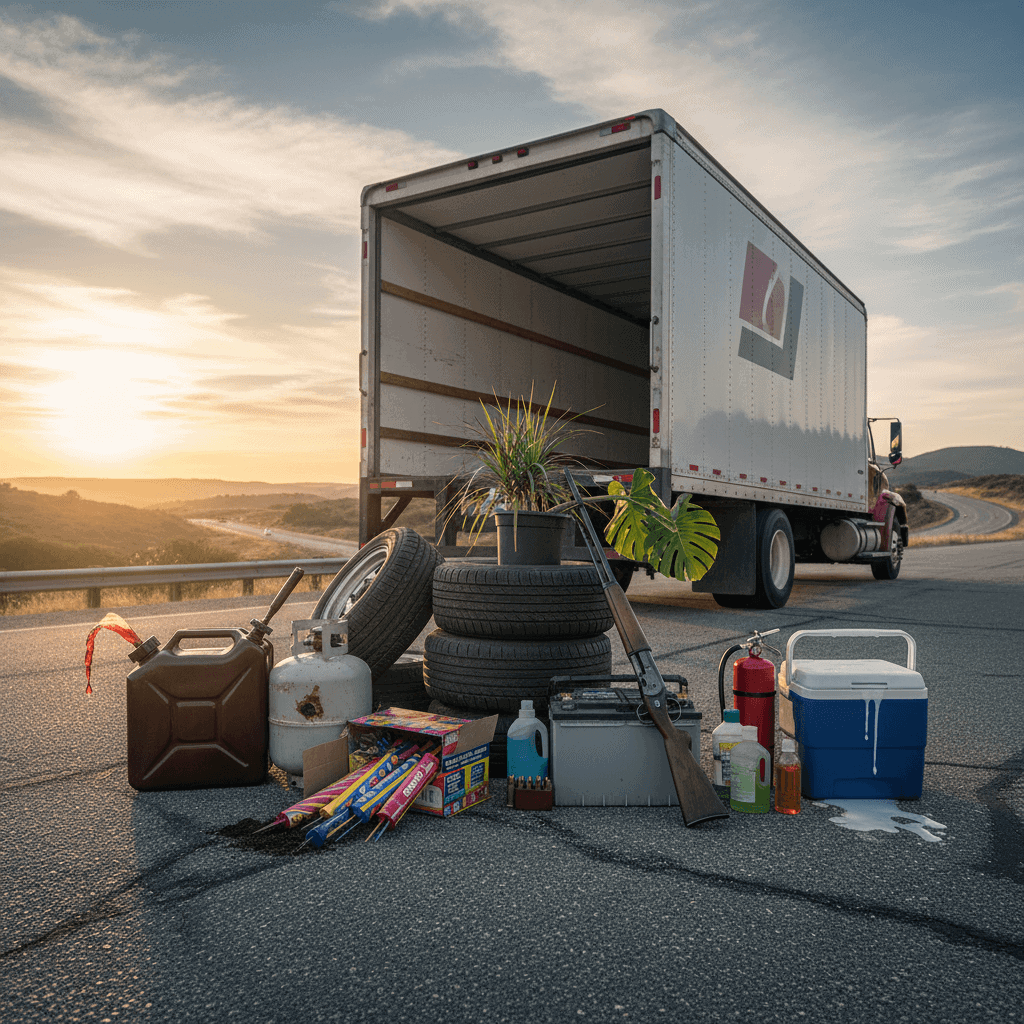
Moving to a new state sparks both excitement and stress. Figuring out what can go on a moving truck trips up a lot of people. Transport rules aim to keep things safe and legal, so packing the wrong stuff might slow down the move or cause fines and damage. Knowing the rules upfront saves headaches and keeps everything on track. That little bit of know-how turns a tough move into a smooth adventure. Keep reading to find out how to dodge those common moving mess-ups.
This article lays out the most common items restricted on interstate moving trucks with clear examples and practical tips. Read on to learn what to keep off the truck, what to declare, and how to handle special items during a long distance move.
Common hazardous items that carriers will not accept
Federal and carrier rules prohibit many hazardous materials because they can catch fire, explode, poison, or corrode. Typical categories include flammable liquids, compressed gases, and corrosive chemicals. Examples are gasoline, lighter fluid, nail polish remover with acetone, pool chemicals, and most household pesticides.
If you have leftover paint use this guideline to reduce risk. Empty paint cans down to dry residue then dispose of them locally according to municipal rules. Many cities run hazardous waste drop off events which is safer than packing paint in a truck that will travel hundreds of miles.
Battery restrictions and electronic devices to watch
Batteries present special rules because many are lithium based and can ignite during transit. Loose lithium ion batteries for laptops, phones, power tools, e-bikes, and hoverboards are often not permitted inside the cargo compartment. Some moving companies will allow devices with batteries if the battery is installed and the device is powered off then protected from accidental activation.
Tips for batteries and electronics
- Carry small lithium batteries with you in carry on baggage or personal vehicle.
- For items like e-bikes or scooters check the battery capacity and state of charge and consult the mover before loading.
- Remove batteries from power tools and label both the tool and the battery so handlers know the status.
Flammable and pressurized items to remove before pickup
Pressurized cylinders such as propane tanks, oxygen tanks, and fire extinguishers are usually banned. Even a small camping stove fuel canister can pose a hazard. Besides tanks, aerosols including spray paints and some personal care products are restricted because they contain flammable propellants.
For example if you own a gas grill the correct process is to remove the propane cylinder and safely transport it separately or empty it and leave it at a recycling center. Do not attempt to put these items inside a sealed trailer.
Perishables, plants and living creatures not allowed
Most moving carriers do not transport live animals on interstate trucks. Plants are also commonly excluded because they can carry pests and because temperature and humidity changes across a long route can kill them. Across state lines agricultural inspections can lead to confiscation of certain species.
Practical approaches for perishables and plants
- Transport houseplants in your vehicle where you can control temperature and water needs.
- Use coolers for a small amount of perishable food during short transit intervals, but avoid large quantities on a long haul.
- If you must move plants check state agricultural quarantine rules to avoid fines or destruction of plants at the border.
Valuables and legal restrictions to consider
Most movers advise you to carry irreplaceable items like cash, important documents, family heirlooms, and jewelry with you. These items are not necessarily banned by law but they are discouraged from being packed in a moving truck because loss and insurance restrictions can be an issue.
Firearms and ammunition have specific rules. Some carriers will allow firearms if they are unloaded, locked, and declared in advance. Ammunition may be restricted or limited in quantity. Always check state and federal rules plus carrier policy well before moving day.
Household chemicals and cleaning supplies that need special handling
Common cleaning products contain corrosive or reactive ingredients and fleets refuse them for safety. Drain cleaners, oven cleaners, bleach in large quantities, and fertilizers are examples. Even seemingly harmless items can become hazards when mixed unintentionally during transit or shift in the truck.
Pack a very small box of essential cleaning products you will need immediately after moving and transport that box in your vehicle. For the rest follow local hazardous waste disposal procedures rather than hoping the moving truck can carry them.
How to prepare and what to tell your moving company
Good preparation reduces the chance of delays and extra fees. First make a detailed inventory and mark any items that might be hazardous. Call your mover weeks before the move to ask about specific items such as batteries, firearms, and medical oxygen. A short list given to the moving company helps their team plan vehicle layout and route choices.
- Ask about labeling requirements and documentation needed for restricted items.
- Request written confirmation if they will accept an unusual item under certain conditions.
- Confirm insurance coverage for the items you must load in the truck.
Declaring items and paperwork
When you declare hazardous items the carrier can advise on alternatives like local disposal, separate transport, or specialized carriers. Federal rules require proper documentation and sometimes placarding if enough of a hazardous class is present. Avoid surprises by sharing a full list with the mover ahead of time.
Practical packing tips and safety checks before moving day
Start early and separate prohibited items from the rest of your belongings. Use clear, labeled boxes for anything that could be problematic. Keep an essentials bag for your first 48 hours at the new location and include medications, important documents, and a small toolkit.
- Take photographs of electronics and valuables before packing for insurance records.
- Use sturdy containers for small hazardous items grouped for disposal rather than transport.
- Confirm pickup times so you can personally deliver items the mover will not accept to the proper drop off location.
When in doubt call the moving company and ask for a written policy. Many customers find it helpful to consult local regulations and federal guidelines together with the carrier policy to get a clear picture of what is allowed and how best to handle special items. For those moving from Austin to another state a reliable local mover can explain rules specific to the origin and destination state and offer practical pickup day advice like where to leave restricted items so they are not loaded on the truck Mountain Movers ATX.
Interstate moving trucks are designed to transport household goods safely, but federal and state rules place limits for good reason. Hazardous materials, certain batteries, live plants and animals, and uncontrolled quantities of corrosive substances are commonly restricted. Plan early, keep a close inventory, and carry valuables with you. With careful preparation your move will go much smoother and you will avoid unnecessary delays.
If you are planning a long distance move review carrier rules early, dispose of or transport restricted items separately, and schedule a short call with your moving provider to confirm details. Taking these steps prevents surprises and helps the move proceed on schedule. Ready to get started contact your chosen mover and set a planning checklist for moving day.