Noise kills focus fast and boosts stress at work. Simple sound tricks don’t call for big changes. Learn what really counts for a quiet space and which easy fixes bring huge relief. People craving calm and clear thinking on the job will gain the most from this. Keep going to see how little tweaks can flip noisy chaos into peaceful calm.
My aim is to give clear, actionable guidance so managers, small business owners, and facilities staff can take steps right away. These acoustic tips improve workspaces by lowering reverberation, reducing distracting speech, and making meetings and calls easier to manage.
Understand the basics of room sound and why it matters
Sound in a room has two main components that affect how people feel. First is direct sound from a source such as a voice or machine. Second is reflected sound that bounces off hard surfaces. Reflections create reverberation which can blur speech and tire the ears.
Targets for reverberation time differ by room use. For small enclosed meeting rooms aim for a reverberation time around 0.4 to 0.6 seconds. For open plan offices a value around 0.6 to 0.8 seconds is common. Measuring with a simple smartphone app gives a quick sense of whether a room is livable or needs treatment.
Quick wins that require little expense and no builders
Several interventions work fast and are low cost. These are ideal for testing before buying fixed acoustic elements.
- Introduce rugs and soft floor coverings under workstations and meeting tables. A thick rug reduces floor reflections and lowers mid to high frequency reverberation.
- Rearrange furniture to break direct sound paths. Placing shelving or tall cabinets between loud and quiet zones helps cut noise travel.
- Use wall hangings and framed textile art in noisy corridors and near work areas. Fabric surfaces both absorb and scatter sound.
- Swap hard chairs for ones with upholstered seats. Small cumulative changes to seating reduce reflections across a room.
- Close doors and fit simple door sweeps to reduce sound leakage from corridors or mechanical rooms.
Acoustic panels and screens where they have the most impact
Strategic placement of acoustic panels delivers consistent results for speech clarity and privacy. Panels work by absorbing sound energy instead of reflecting it back into the room.
When choosing panels look at the absorption rating such as NRC. Panels rated 0.8 or higher remove a large portion of incident energy at mid frequencies that matter most for speech. For practical guidance consider covering 10 to 30 percent of wall and ceiling area depending on how lively the room sounds.
One supplier page explains practical options for small companies and schools and helps you choose panel size and placement before ordering, just visit akupanel.
Where to place panels for fastest results
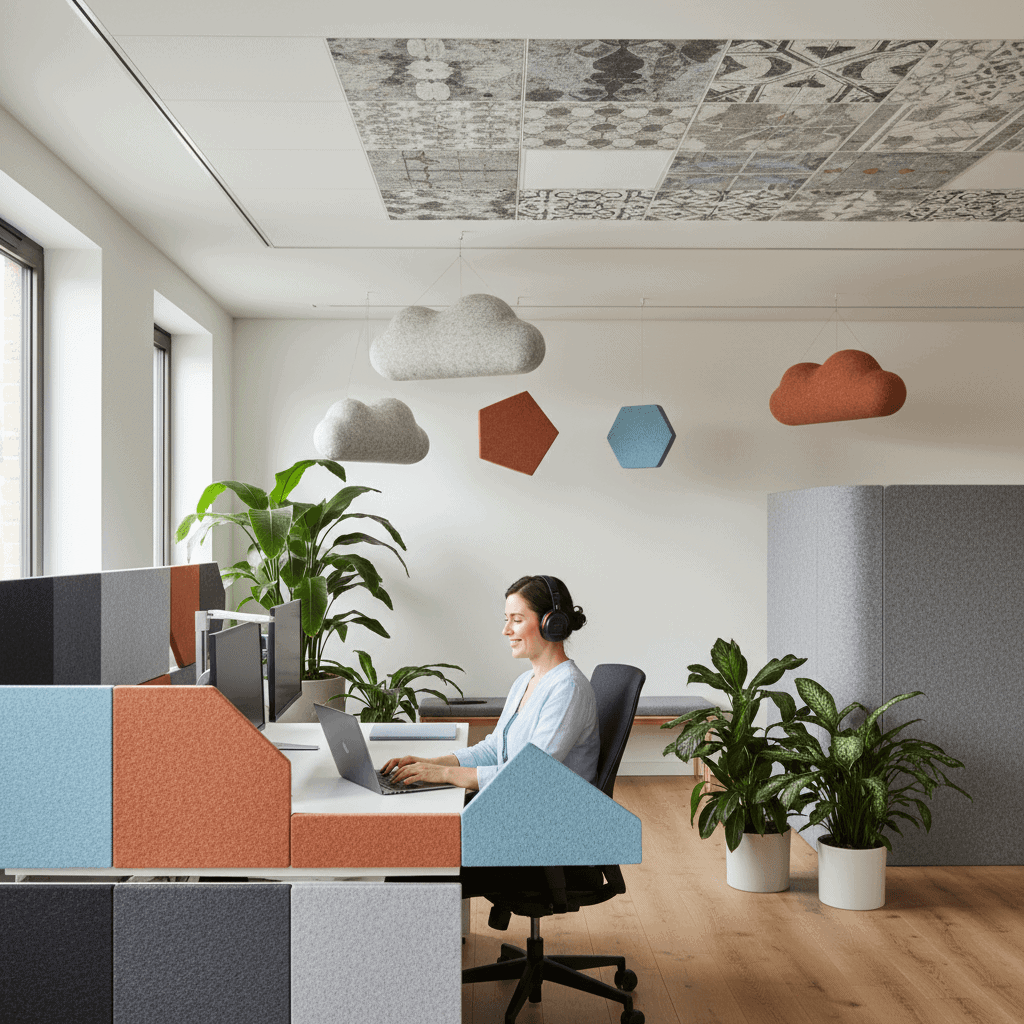
- Ceiling area above open workstations blocks reflections from high surfaces. Ceiling-mounted panels or clouds are particularly effective in rooms with exposed ceilings.
- Behind and beside monitors to reduce early reflections that reach the listener.
- On walls facing the primary seating area, placed at head height to catch speech reflections.
Types of panel finishes and practical considerations
- Fabric wrapped panels offer visual appeal and can be mounted with simple brackets.
- Mounted screens on desks provide privacy and reduce cross talk between neighboring workers.
- Consider panels with customizable print surfaces to match branding without sacrificing acoustic function.
Layout strategies for speech privacy and meeting quality
Sound travels along lines of sight. Layout changes can be as powerful as physical treatments. Group noisy activities away from quiet zones and create buffer zones such as storage areas to separate areas with different uses.
- Cluster collaborative tables near the entrance or dedicated hubs so that focused workspaces lie farther away.
- Use bookcases and modular storage as soft partitions to interrupt direct sound paths while providing useful storage.
- Designate phone booths or small enclosed rooms for calls. Even low cost pods with fabric walls greatly reduce disturbance to others.
Addressing HVAC and mechanical noise
Background mechanical noise from ventilation or cooling has a large effect on comfort and perceived privacy. Start by measuring the sound level during peak operation times. Typical target levels for office background noise lie near 35 to 45 dB LAeq depending on activity. When levels are much higher people report difficulty concentrating.
Simple measures to reduce mechanical noise include balancing vents, replacing worn fan bearings, and adding flexible duct connectors to remove vibration paths. Large investments are not always necessary; regular maintenance often solves the worst cases.
Windows glass and door seals as often overlooked sources
Windows and glazed partitions reflect sound strongly. Adding heavy curtains or window treatments helps reduce reflections and external noise ingress. For hinged doors, fitting perimeter seals reduces flanking paths where conversation and sound leak between rooms.
- Thick curtains that drop close to the floor and cover the full window width are most effective at mid and high frequencies.
- For rented spaces consider removable seals and magnetic strips that do not damage frames.
Measure and track results so you know what works
Small changes can produce surprising returns. Use a consistent method to measure before and after implementing a tip. A quick approach uses a smartphone app to record reverberation time and A weighted sound levels during a standard test such as a speaking voice at a single point.
Track metrics across days and different occupancy levels. If you add panels record the RT60 measurement and listener feedback to justify further steps. When a single action produces a 20 to 40 percent reduction in reverberation time that is a meaningful improvement that people notice.
Sample step by step process
- Measure baseline sound level and reverberation time during normal occupancy.
- Apply low cost interventions such as rugs and rearranged furniture.
- Re-measure and document improvements.
- If needed add panels in priority areas and re-measure to confirm gains.
Practical budget friendly planning and procurement tips
Most teams do not need to buy the most expensive options to get great results. Follow these purchasing suggestions to reduce risk and waste.
- Start with a pilot in one room or zone. A successful pilot makes the case for broader rollout and prevents wasted purchases.
- Choose modular elements that can move with changes in layout. Freestanding screens and mobile panels retain value better than fixed options.
- Request performance data such as NRC and sample mount details. Compare small sample panels before larger orders.
- Factor installation time into cost. Items that staff can mount quickly avoid contractor fees and speed results.
Behavioral and operational tips to complement physical changes
Not all sound problems are purely architectural. Introducing simple workplace norms reduces noise without any equipment. These policies work best when paired with physical acts that show care for acoustic conditions.
- Encourage short calls to be taken in designated areas and set expectations for meeting lengths and volume in open areas.
- Provide a clear booking system for focus rooms and phone booths so people know when spaces are available for quiet tasks.
- Train reception and meeting hosts to offer headphones or suggest quieter spots when visitors need privacy.
Combining environmental changes with modest behavior shifts yields a sustainable reduction in disturbance and raises satisfaction. Data shows that employees who report better acoustic conditions are less likely to be interrupted and more likely to rate their workspace positively.
Conclusion paragraph one should begin the wrap up and invite action
Conclusion paragraph two must be at least one hundred fifty words and summarize the topic while encouraging action
Good acoustic design does not need to be costly or invasive to have a major effect on daily comfort. The steps outlined here provide a clear route from diagnosis to low cost fixes and measured upgrades. Start by listening and measuring to know whether a room is lively or calm. Apply quick wins such as rugs, curtains, and desk screens to gain immediate reduction in reflections. If those steps are not enough add wall or ceiling panels in priority locations and check the results with another measurement round. Pay attention to mechanical noise, window treatments, and door seals as these often underlie persistent problems.
Make a plan that begins with a pilot area to show visible and measurable improvement. Use modular and movable solutions to keep flexibility as your workspace changes. Communicate small rules that keep noise low and give people access to quiet rooms when they need privacy. If you want more detailed guidance on panel selection and layout for small businesses there are product pages and supplier notes that explain options with mounting and performance data. Taking one step now will likely improve concentration, reduce complaints, and make meetings simpler. Try two low cost actions this week and measure the change. If you need help deciding on materials or placement book a short consultation with a workplace acoustic specialist or request samples from vendors so you can test in your space.